Product launch calendar
A planning platform for marketing launches that replaced a set of disconnected spreadsheets. It schedules every milestone backwards from the launch date and pulls performance data back in after the launch ships.
Launch planning lived in spreadsheets that each team copied and edited on its own, so two people could hold different dates for the same launch and neither knew. Photo shoots were booked over email. After a launch shipped, measuring it meant exporting numbers by hand from two separate platforms, which in practice meant it rarely happened.
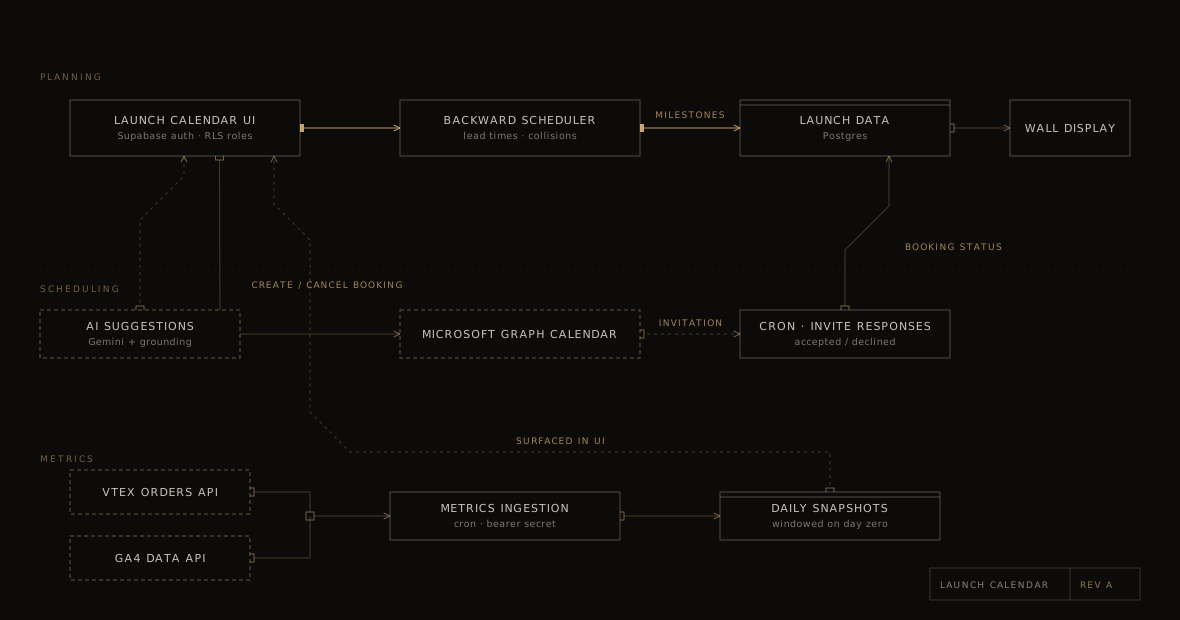
The scheduling engine is the core. The launch date is the anchor, and every milestone is derived by subtracting its own lead time, snapping to business days, with collision detection when two launches compete for the same window. Moving the launch date moves the whole plan, which is what a spreadsheet could never do.
Photo shoot booking is two way. Creating a booking in the platform creates the calendar event and sends the invitation, so the photographer works from their own calendar and never has to log in. A scheduled job reads their acceptance or decline back and reflects it in the booking status, which keeps the platform honest about what is actually confirmed.
Metrics ingestion runs as a scheduled job behind a shared secret. It pulls order data and analytics sessions for each launch, stores daily snapshots and windows them around the launch date, so every launch can be compared on the same axis. Access is scoped by role at the database level, and a read only display view shows the current plan on a wall screen.
Stack
- Next.js
- TypeScript
- Supabase
- Postgres
- Row Level Security
- Vitest
- Tailwind CSS
Integrations
- Microsoft Graph
- VTEX Orders API
- GA4 Data API
- Gemini
Backward scheduling from a single anchor date was chosen over letting people set each milestone by hand. It means the plan is always internally consistent, and the one date a team actually negotiates is the one date they edit.
Every integration degrades on its own. If the calendar service is not configured the platform still books shoots, it just does it without invitations. That was a deliberate constraint: the tool had to stay usable during the period when only part of the organisation had migrated.
Role permissions are enforced in the database rather than the interface, so a missed check in a new screen cannot leak another team's plan.
02 — Next project
Let's map the route.
santiagovalenciavera@gmail.com · Open to senior roles and select projects