Universidad de Antioquia: Wayfinding System
One wayfinding system for four buildings that share almost nothing: an urban tower, academic buildings, a hospital and a rural campus. Eight years with Universidad de Antioquia.
Role: Independent Creative Director and Designer
A wayfinding system that started in one tower in 2005 and grew across the university for eight years: two academic buildings, a 29-room clinical environment, and a rural campus where buildings are named after native trees.
Universidad de Antioquia needed wayfinding for four buildings that had almost nothing in common: a nine-floor tower in central Medellín, two academic buildings, a hospital, and a rural campus. There was no budget to design a custom system for each one — and four separate systems would have been the wrong answer anyway. The university needed one set of rules that could bend to different materials, scales and users without breaking.
I wrote those rules in 2005 and spent the next eight years proving them, building by building.
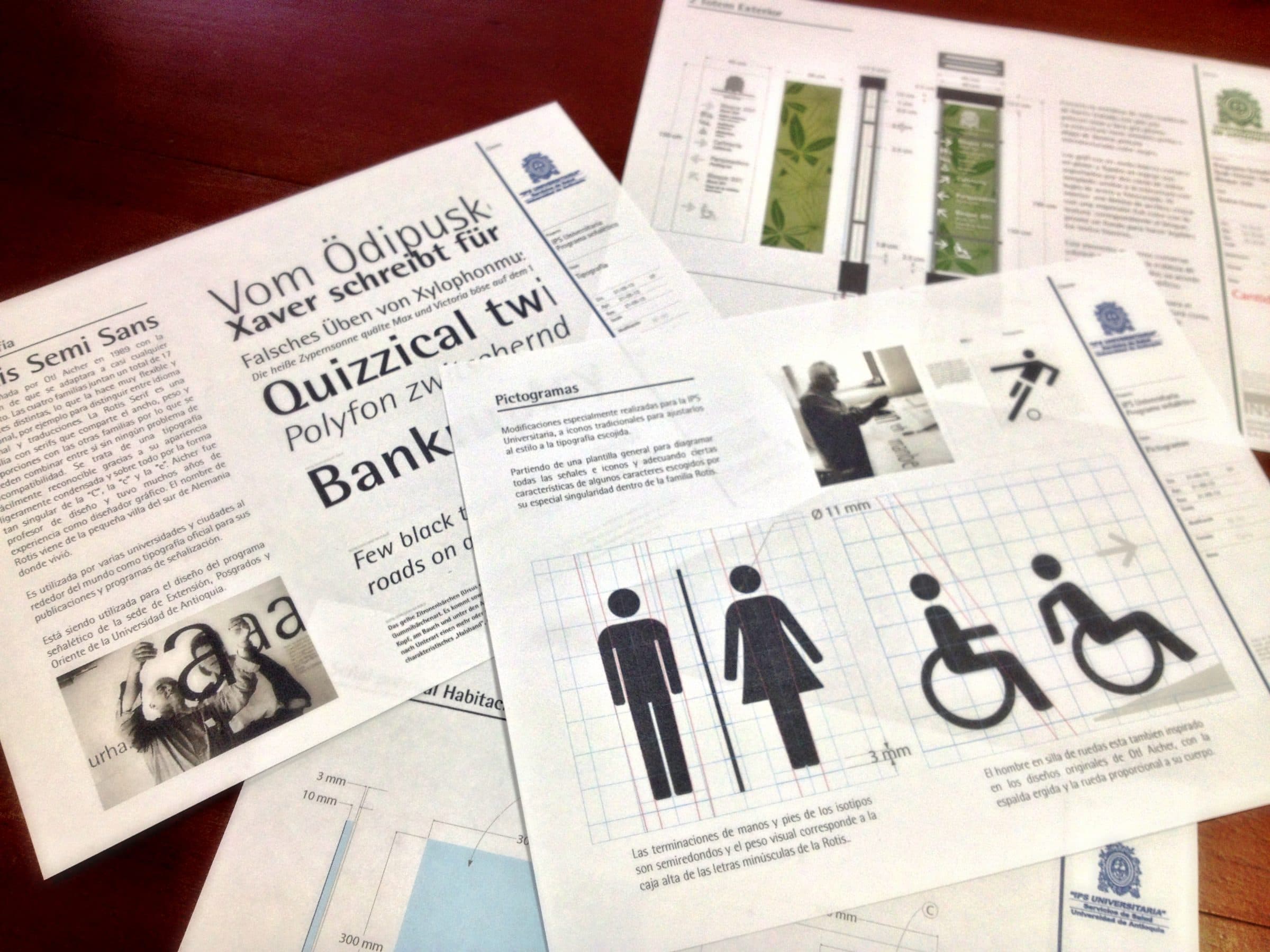
The system was born here, in a nine-floor tower in central Medellín. Before drawing a single sign I walked the building level by level and documented everything: circulations, decision points, the signage that already existed, how people actually asked for directions. That audit became the base framework — typography, hierarchy, placement logic — that every later building would inherit.
The first time the system left home. A purely academic environment with a different population: graduate students, researchers, faculty. The rules held; only the program mix changed. This was the project that told me the framework could travel.
The largest implementation by area, and the one that taught me the most. A clinical environment: 29 rooms, 87 patient-care signs, all bilingual.
The hard part was tone. Hospital signage has to be precise and calm at the same time, because the person reading it is often having one of the worst days of their year. I adjusted the hierarchy for high-stress reading and specified materials that could survive a sanitary environment.
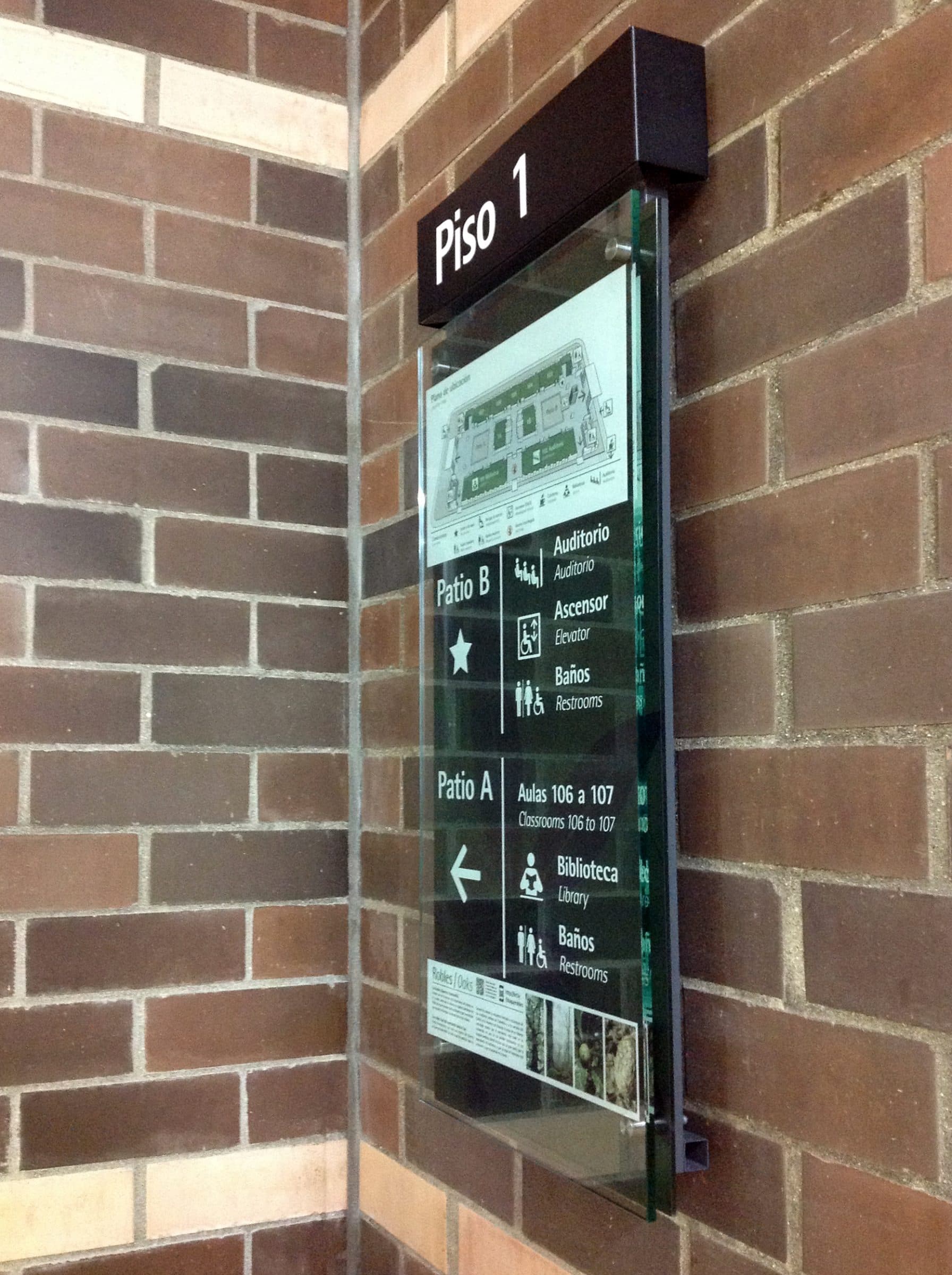
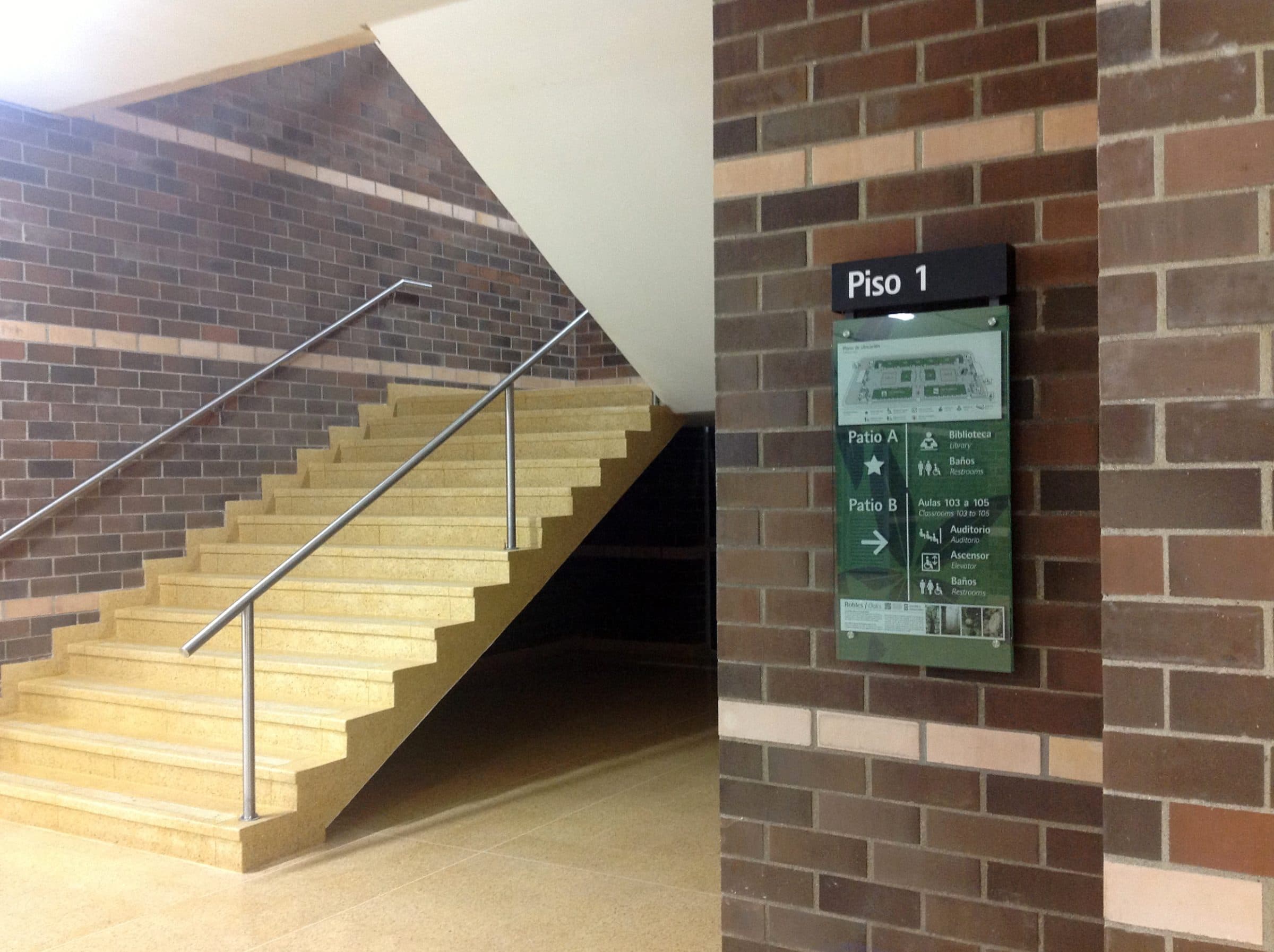
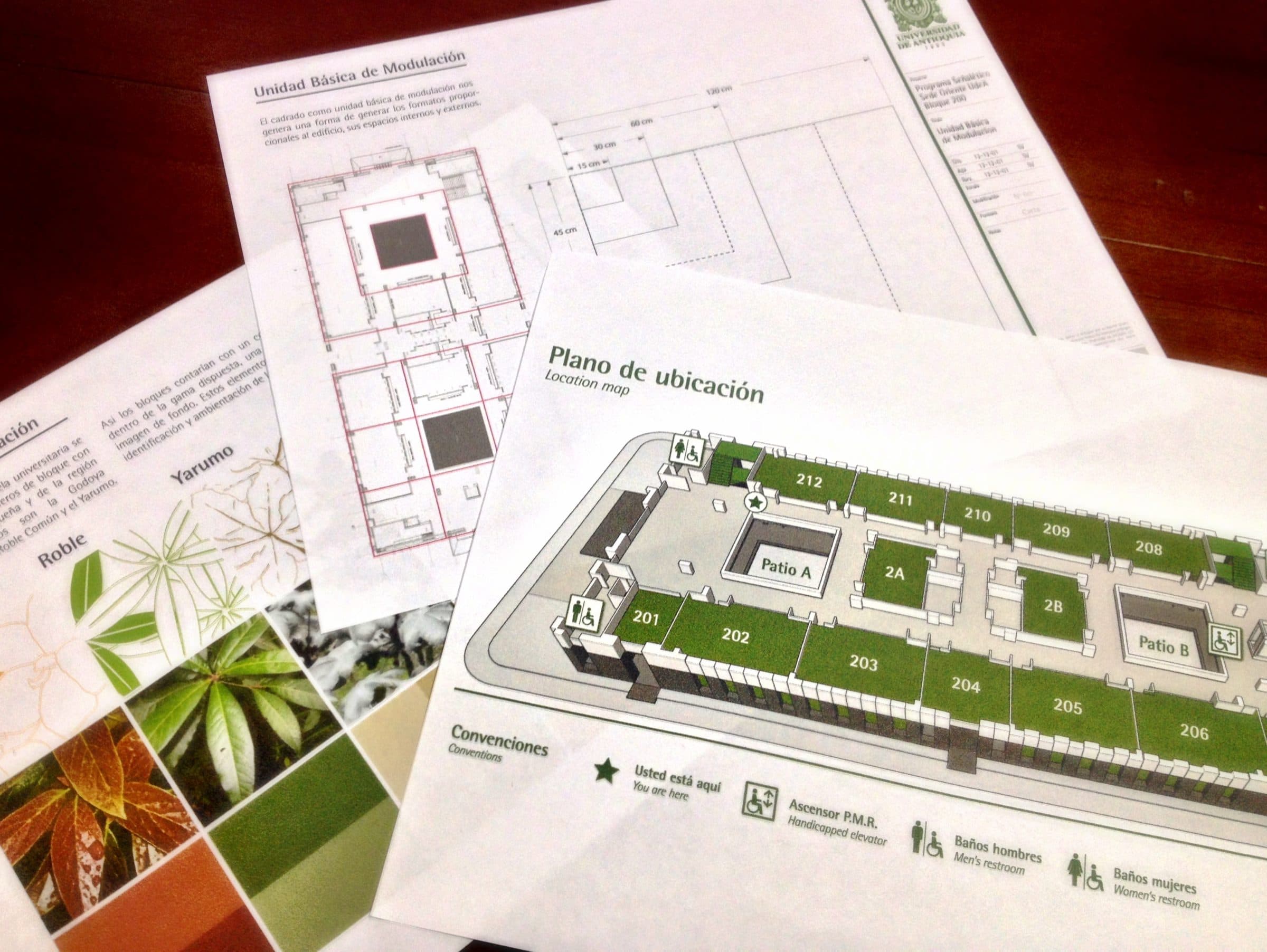
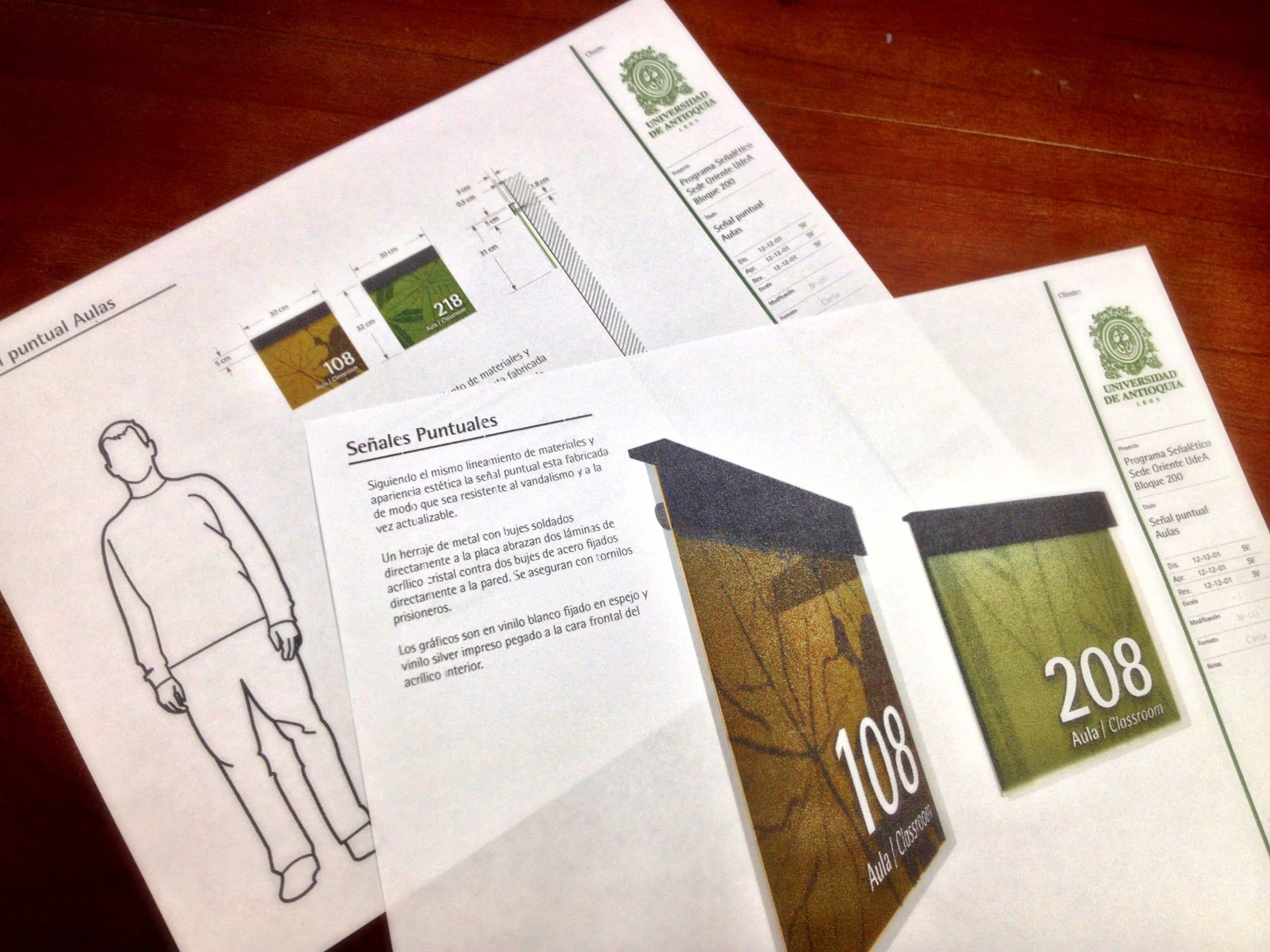
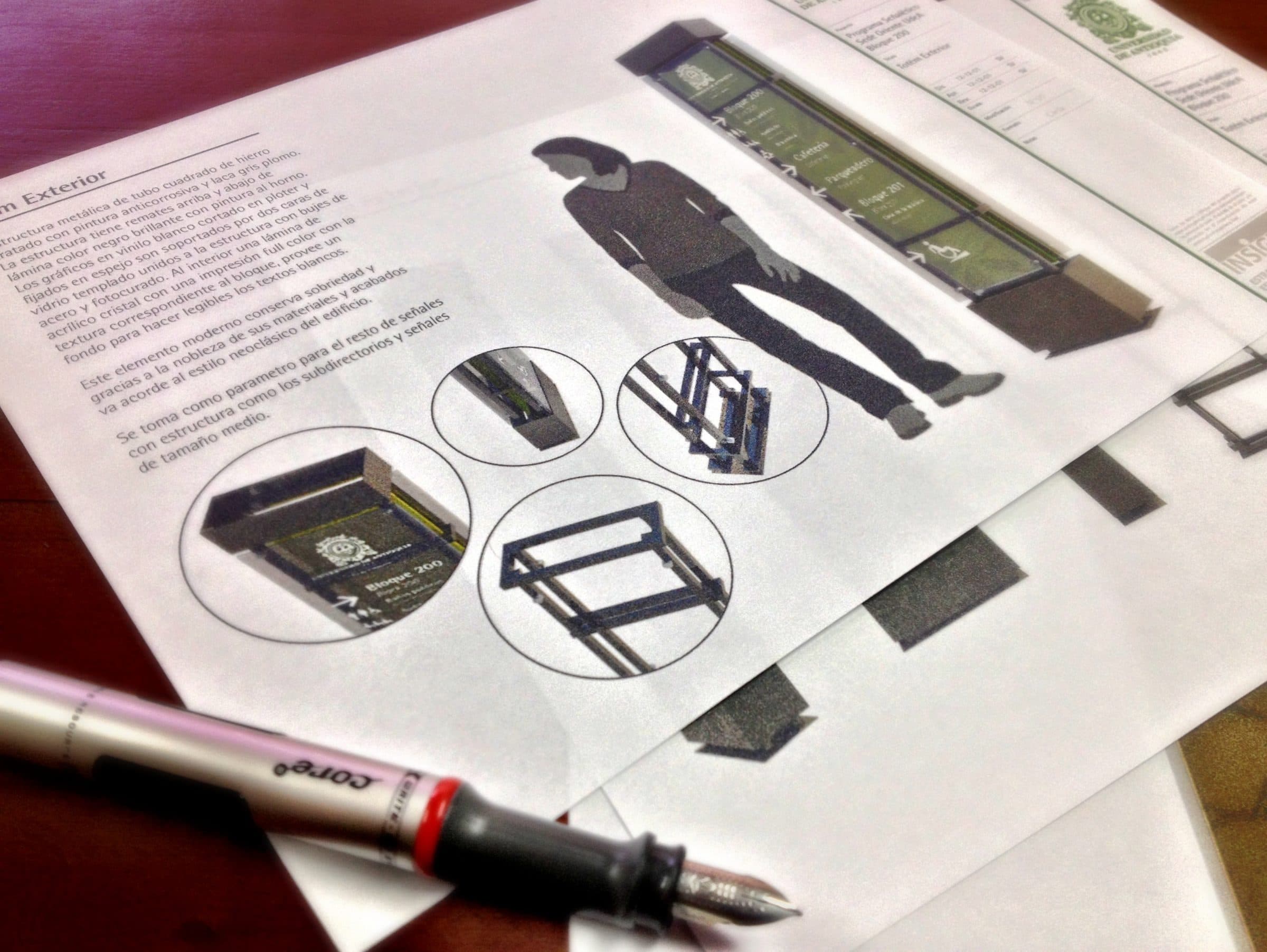
The rural campus, and my favorite piece of the system. Instead of numbers or letters, the buildings took their names from the regional flora: Yarumo, Roble, Nogal, Chagualo, Caunce, Candelo.
The naming was designed so the university could keep growing the campus without me. Any new building can be named and folded into the system by whoever is in charge that year, just by following the logic. I handed off a framework the university could keep cultivating on its own.
UdeA Sede Oriente